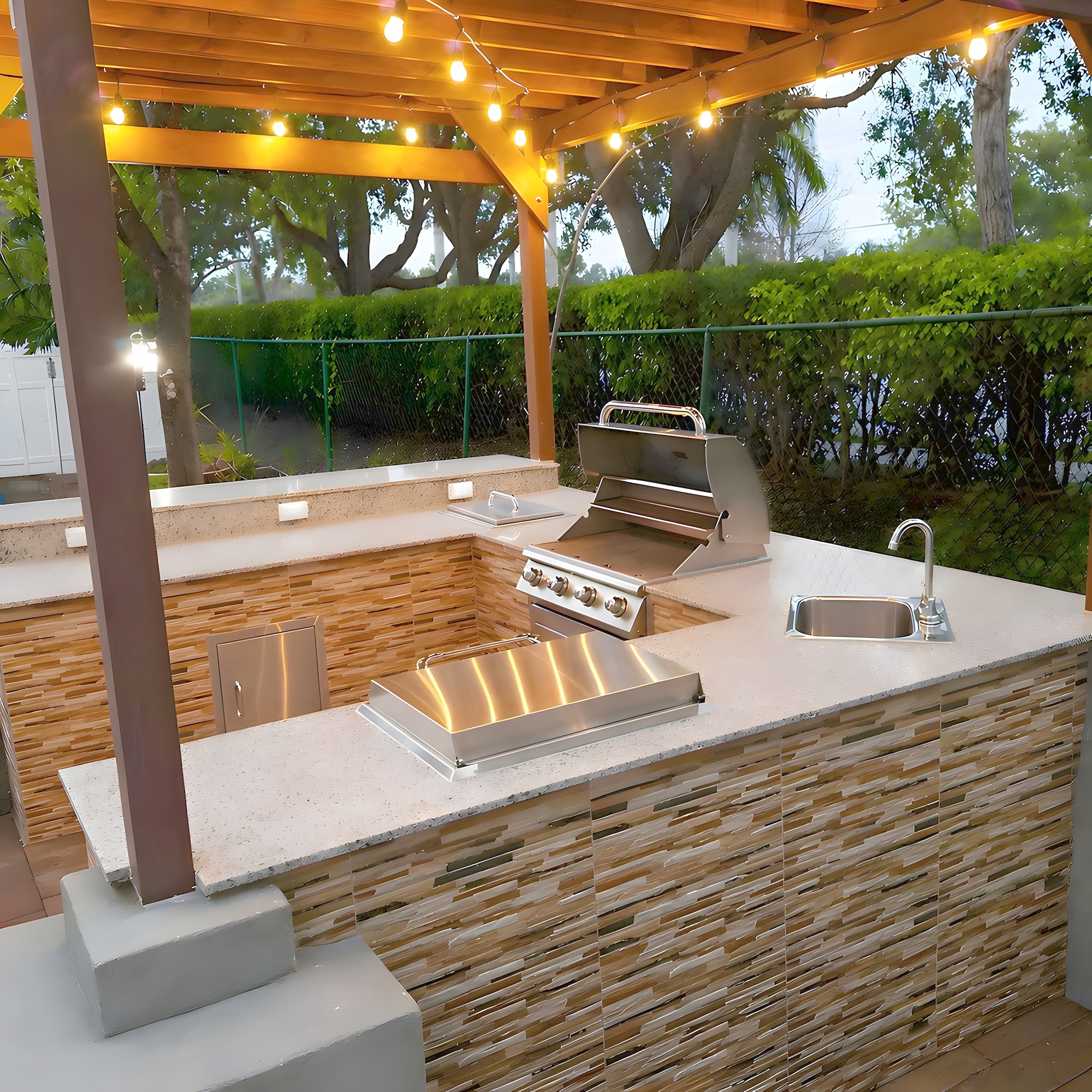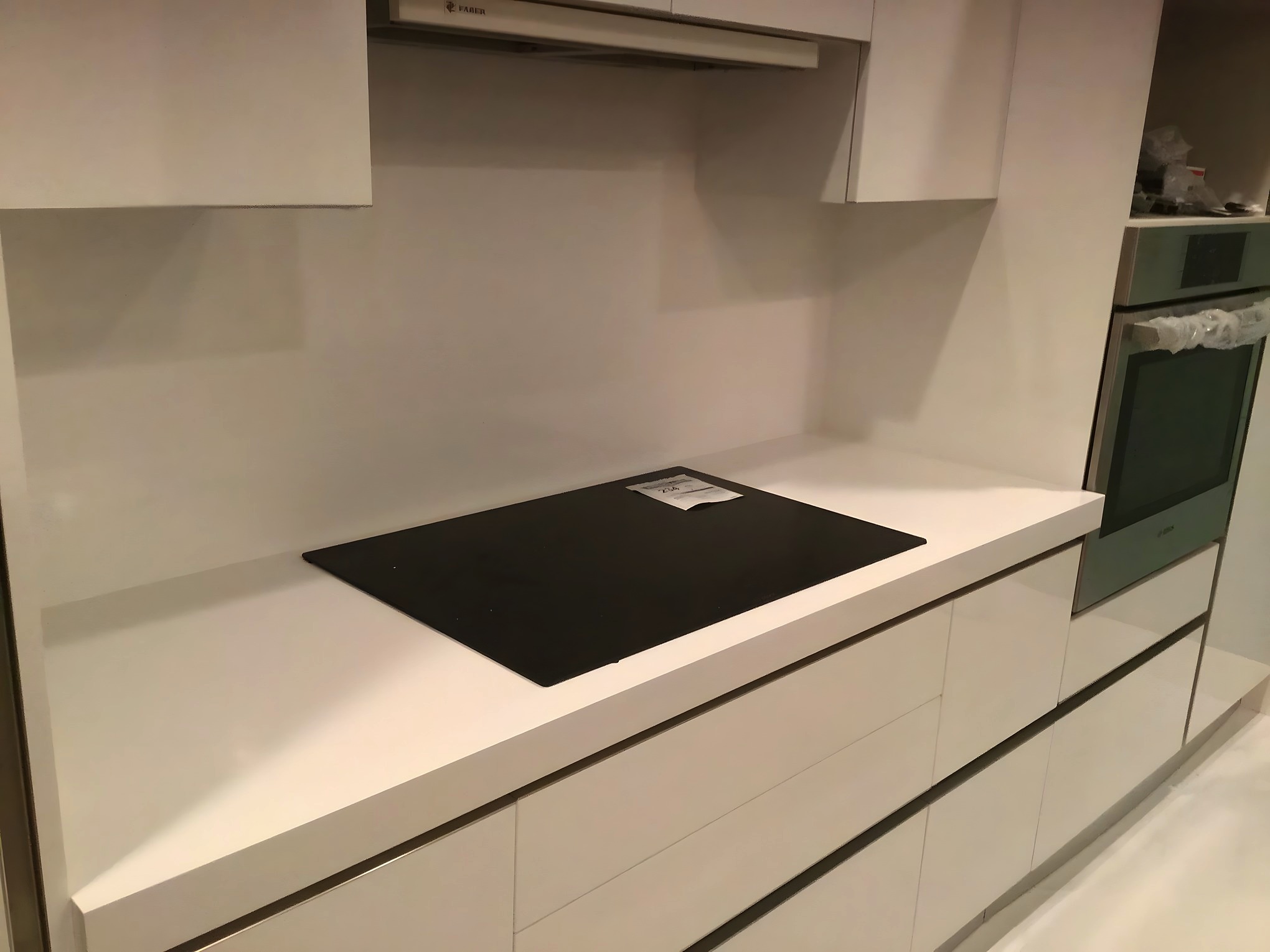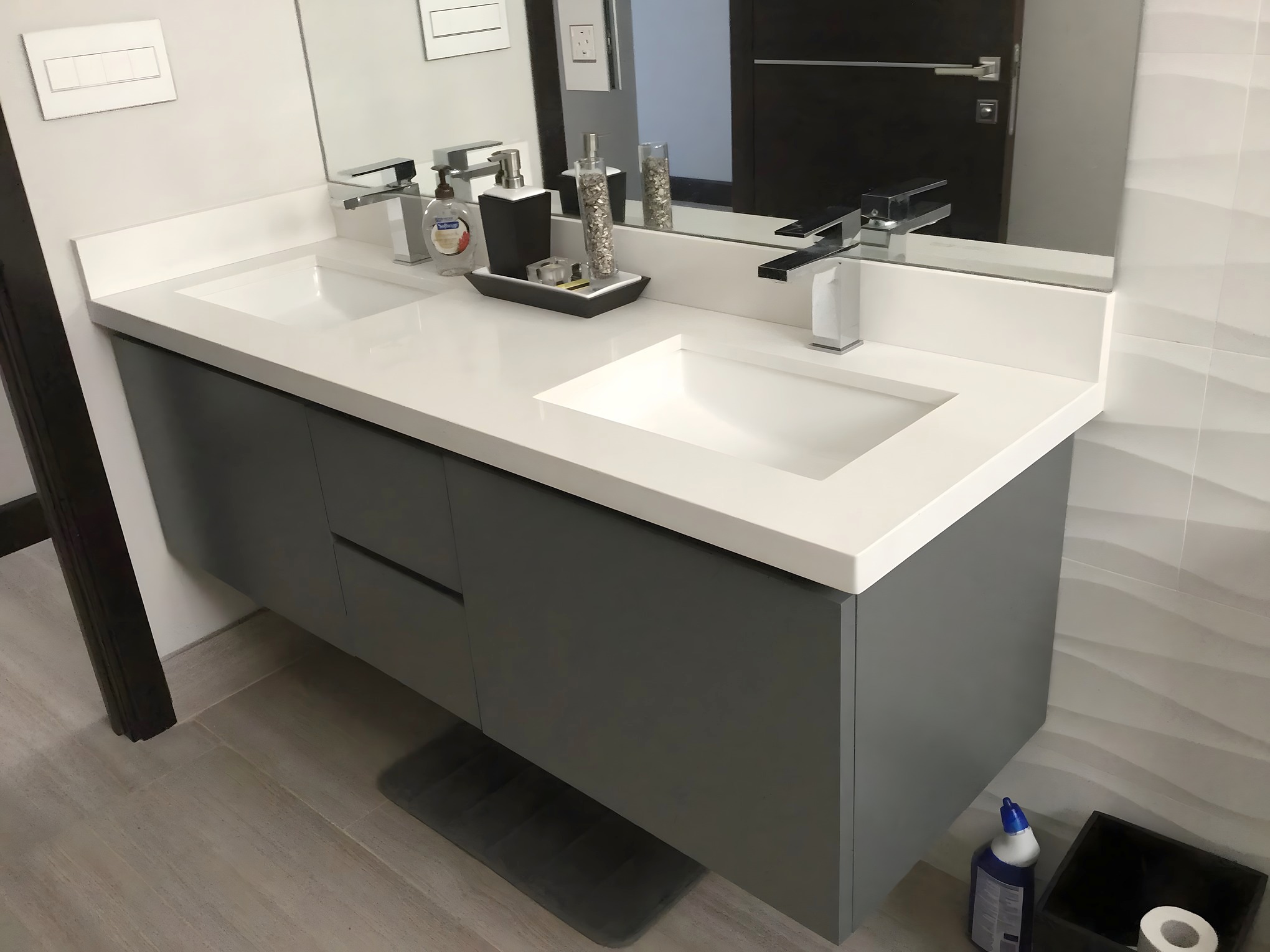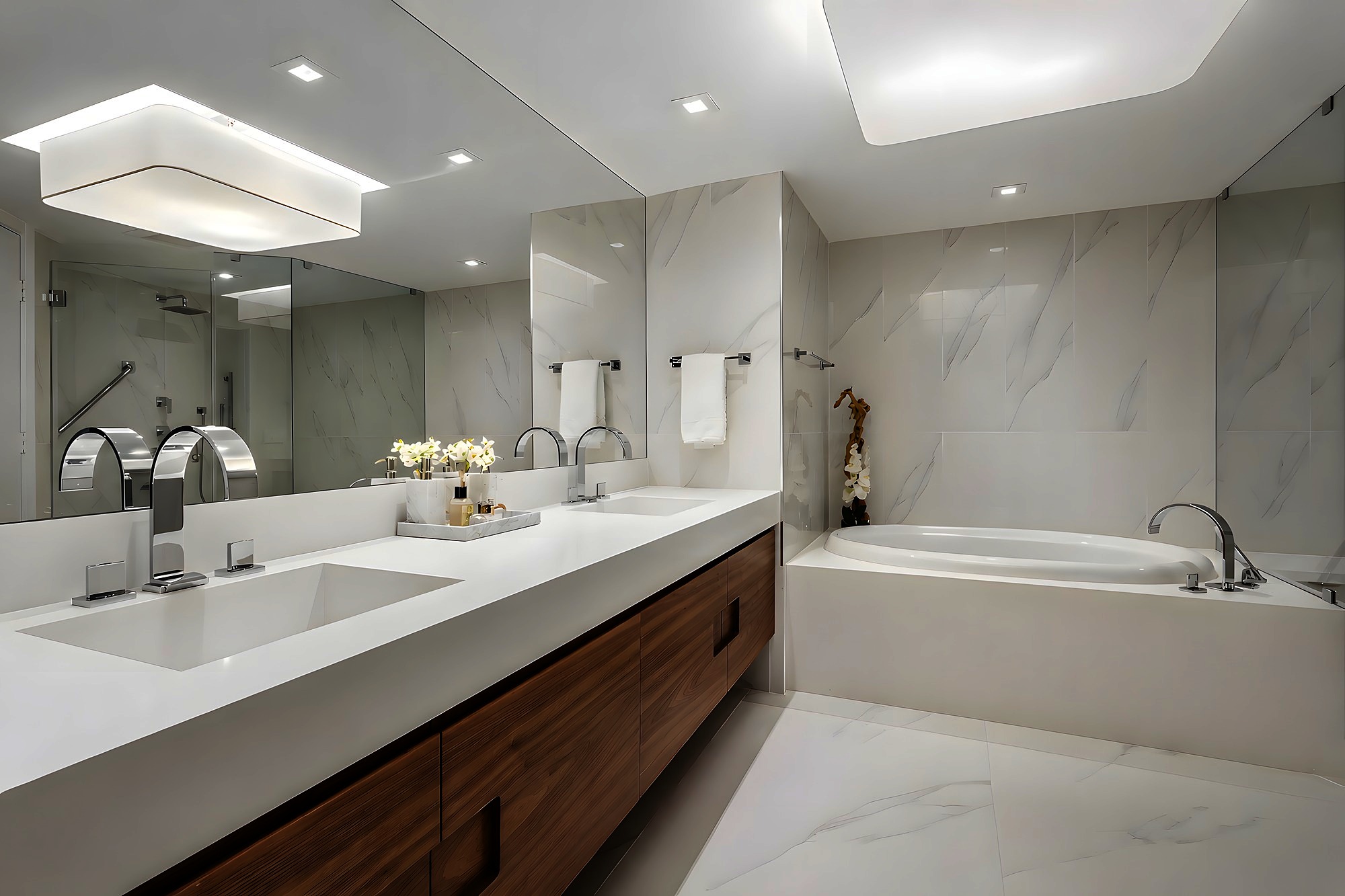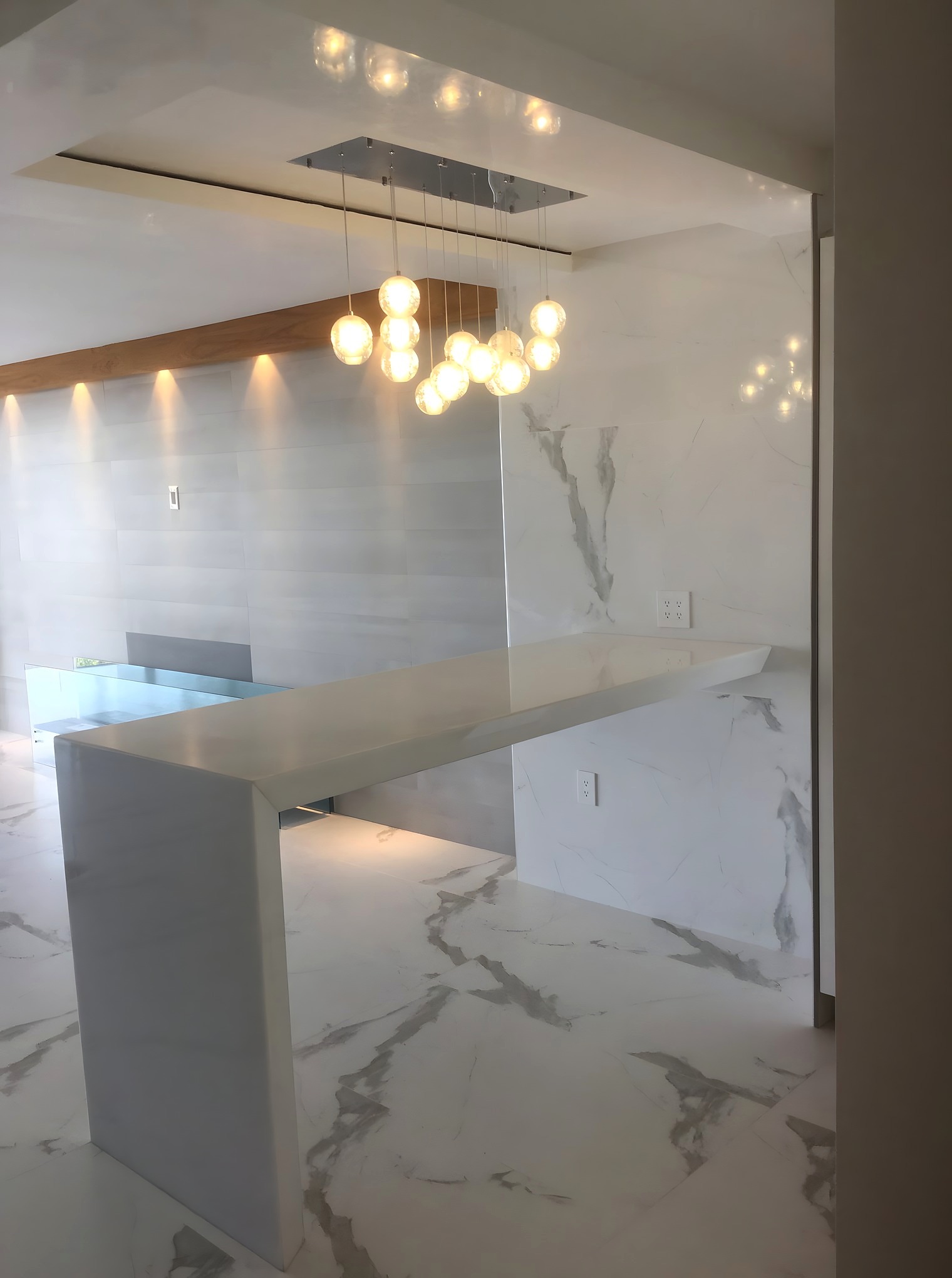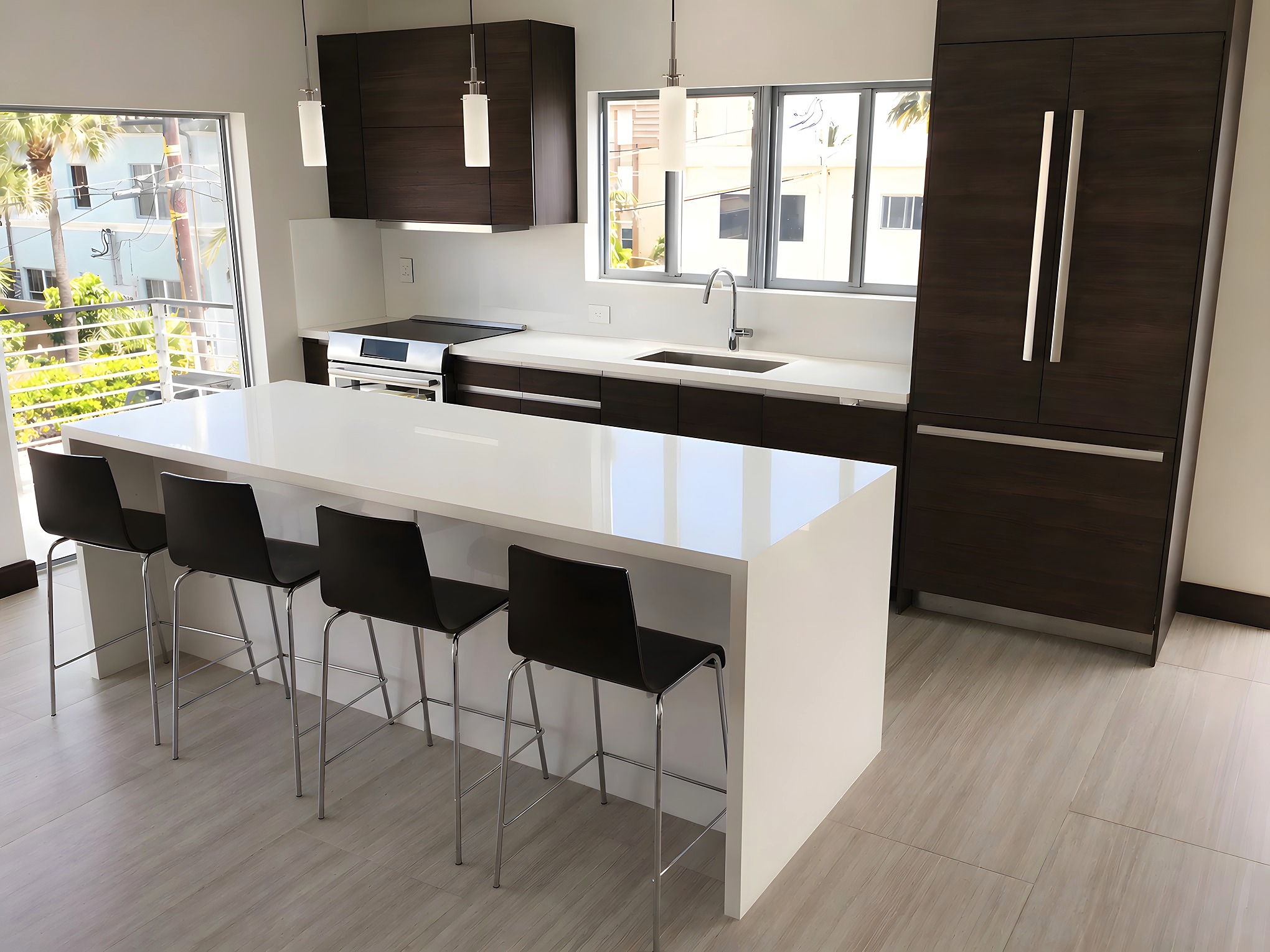
The 90° joint that makes a 2cm slab look like a 6cm slab. Cut, mitered, and seamed in our Hialeah workshop — by hand, by people who've done it a thousand times.
The technique
A mitered edge is a 45° bevel cut on two slab edges. When joined, the seam disappears into the veining — the visible thickness is whatever you choose, while the actual slab stays at standard 2cm or 3cm.
It's the difference between a countertop that looks like a countertop, and one that looks like a single carved block of stone. We do it in-house with our CNC and bridge saw — most fabricators outsource this.
What is a mitered edge?
Cut on the bevel, the join falls inside the veining. Most clients never spot it after the polish.
Visible thickness is whatever you want — 2 inches, 4 inches, 6. The slab itself stays standard.
Reads like one solid carved block. The single detail that separates a builder kitchen from a designer one.
Recent miters


Applications

Waterfall ends that wrap the slab down to the floor — the signature move for open-plan kitchens.

A thick mitered perimeter on a peninsula gives the counter visual weight without adding real mass.

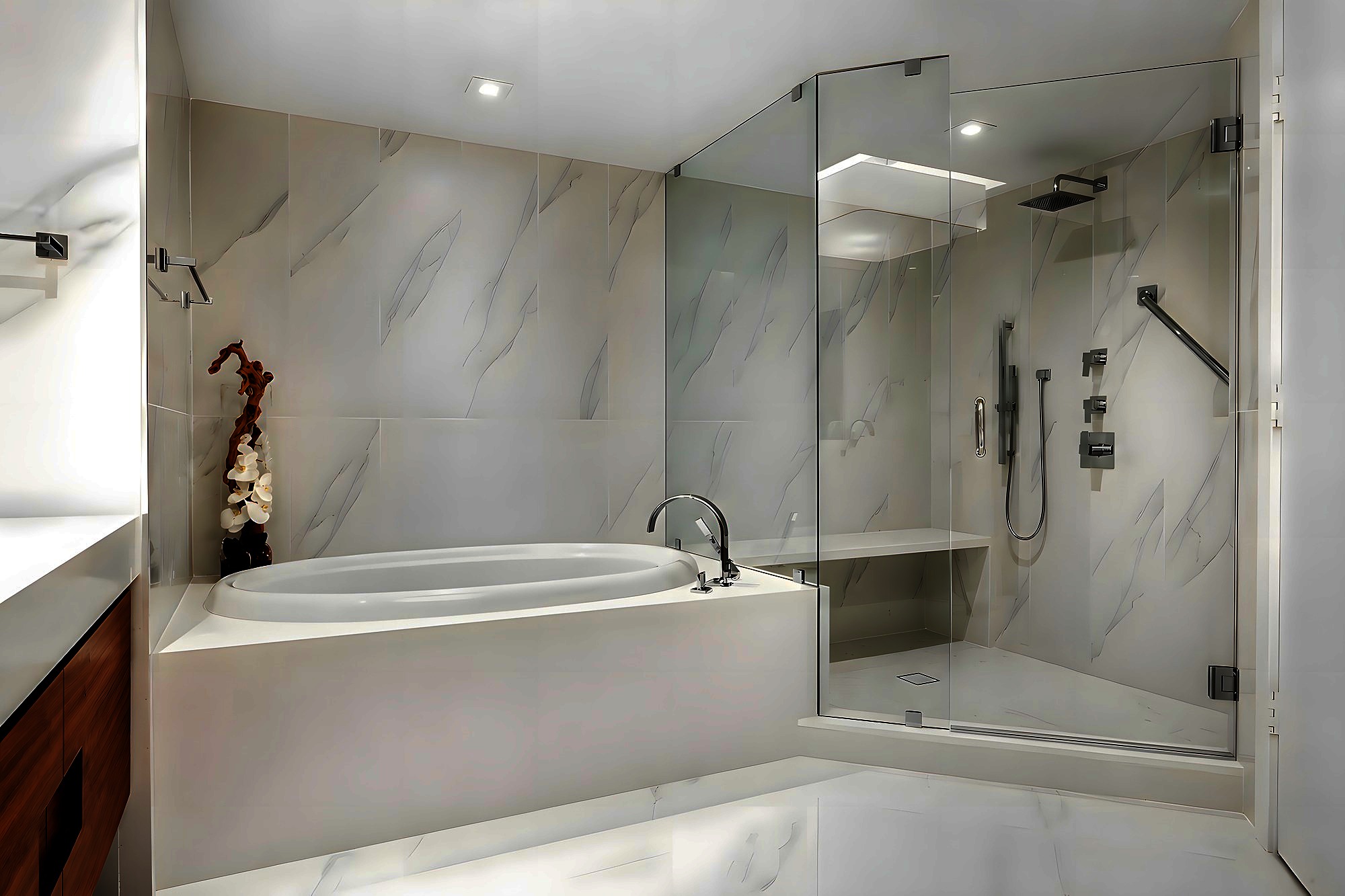
Mitered edges on a floating vanity make the stone look carved from a single block — clean, minimal, heavy.

Bars, reception desks, retail counters — anywhere you want the stone to make a statement.
Read the full guide
The longer piece — how the cut works, when it makes sense, what it costs, and how to tell good miter work from bad. Five-minute read.
Read the guide“We asked three fabricators about a waterfall island — two said they'd outsource the miter. Becca did it in-house, the seam is invisible, and the install was done in one morning. Couldn't be happier.”
— Homeowner, Brickell
Free mitered estimate